
India Today's Innovation of the Decade: The Story Behind the Plastic-Body Inverter
India Today's Innovation of the Decade: The Story Behind the Plastic-Body Inverter
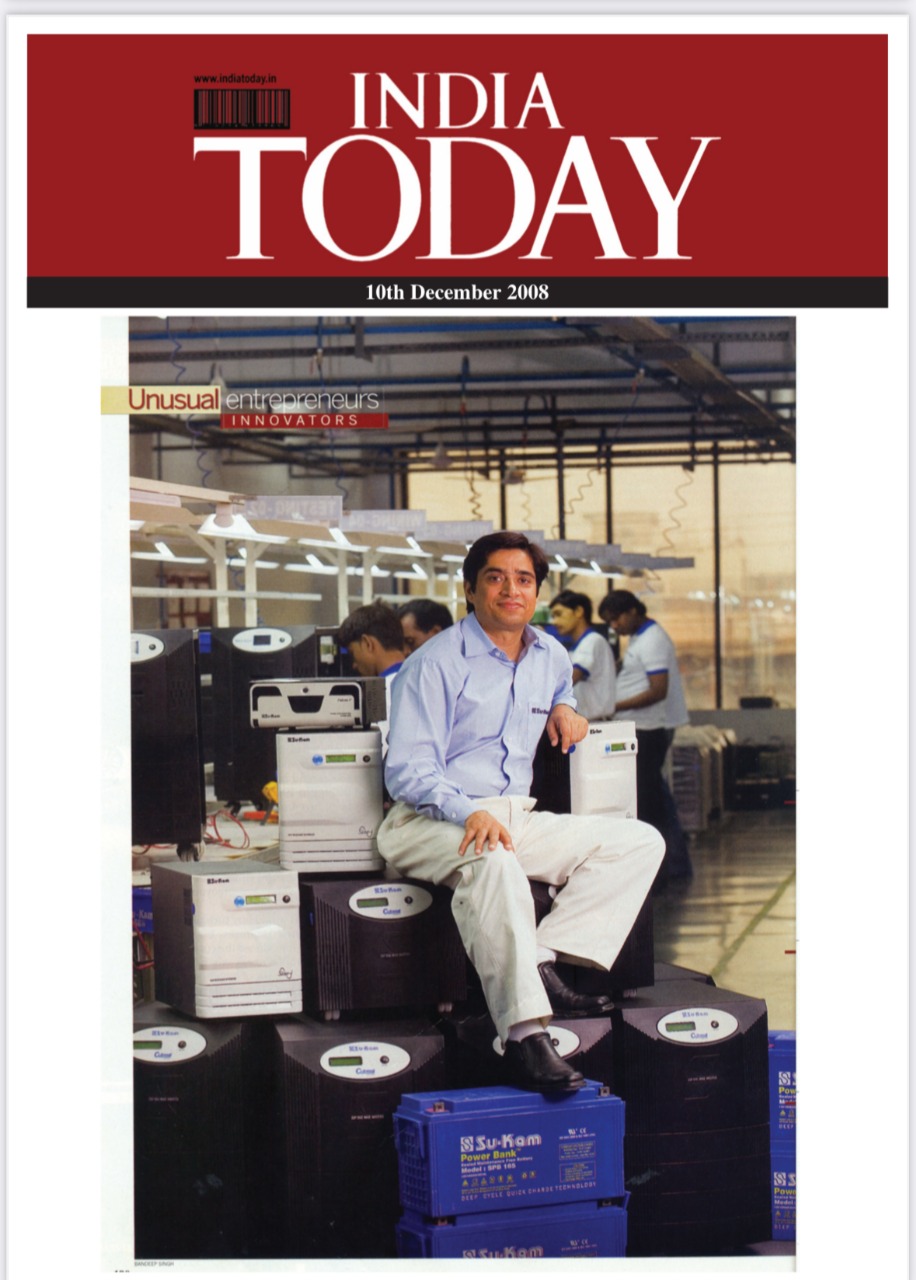
While sorting through old press clippings in our office, we found the original India Today feature that named our mentor Kunwer Sachdev Sir's plastic-body inverter the "Innovation of the Decade." Here is what we discovered.
A few weeks ago, while sorting through a box of old press clippings and award certificates tucked away in our Su-vastika office, we came across something remarkable: the original India Today feature that named our mentor Kunwer Sachdev Sir's plastic-body inverter as the "Innovation of the Decade." We had heard the story in passing, of course — but holding that yellowed magazine page in our hands sent us down a rabbit hole of research into one invention that changed an entire industry.
We use inverters every day at Su-vastika. They are as familiar to us as our office chairs. But what we didn't know until researching this was just how radical the very concept of a plastic-body inverter was considered when Kunwer Sir first proposed it. Before the early 2000s, an inverter was an industrial-looking steel cabinet — heavy, expensive, potentially dangerous, and hidden away in a storeroom or garage. After Kunwer Sir introduced the plastic-body inverter, that same appliance became lightweight, safe, affordable, and attractive enough to sit in a family's living room.
India Today recognized this shift as nothing short of revolutionary. But the archives reveal that the story behind that award is not just about swapping metal for plastic. It is about rethinking an entire product category from first principles — and, in doing so, democratizing energy access for a nation that desperately needed it.
"Innovation of the Decade"
Awarded by India Today for a breakthrough that changed how 300 million Indian households think about, buy, and live with power backup. We found this clipping in our office archives — and it stopped us in our tracks.
The Problem: Heavy, Dangerous, and Hidden Away
To understand why this innovation mattered so much, we had to go back and understand what inverters looked like before our mentor reimagined them. What we found in old trade magazines and industry reports was eye-opening. In the 1990s and early 2000s, power backup in India meant one of two things: a noisy diesel generator for the wealthy, or a bulky metal-cased inverter for the middle class.
These metal inverters came with serious drawbacks. They were heavy — often 25 to 40 kilograms of steel casing alone. The exposed metal surfaces posed real electrical safety risks, especially in homes with children or in regions prone to flooding. They were ugly, industrial objects that no homeowner wanted visible in their living space. And because of the cost of metal fabrication, they were priced beyond the reach of most Indian families.
The result was a strange paradox — and one we hadn't fully appreciated until we dug into the history. India had one of the world's worst power-reliability problems, yet the solution — the inverter — remained a semi-luxury product used by a fraction of the households that needed it.
Before: The Metal-Box Era
- Heavy steel enclosures (25–40 kg)
- Electrical shock hazard from metal body
- Industrial, unattractive appearance
- Hidden in storerooms and garages
- Expensive to manufacture and ship
- Out of reach for most families
After: The Plastic-Body Revolution
- Lightweight moulded plastic (fraction of weight)
- Double-insulated — inherently shock-proof
- Sleek, modern, consumer-appliance design
- Proudly displayed in living rooms
- Dramatically lower production costs
- Affordable for millions of households
The Insight: Think Like a Consumer, Not an Engineer
As we pieced together the story from old interviews and press features, one detail stood out. Kunwer Sir's breakthrough began not in a laboratory, but in the homes of real customers. Visiting households across India, he noticed the same pattern everywhere: inverters were being treated like shameful necessities — shoved into corners, hidden behind curtains, kept out of sight.
"I asked myself a simple question: why can't an inverter be as welcome in a living room as a television? The answer was that no one had tried to make it that way." — Kunwer Sachdev
Reading that quote in the original clipping gave us chills. The insight was deceptively simple. Instead of building a better metal box, Kunwer Sir decided to reimagine the inverter as a consumer appliance. The archives reveal that this meant three fundamental changes:
1. Lightweight plastic body — Engineering-grade moulded plastic replaced heavy sheet metal, cutting weight by more than half and eliminating the electrical shock hazard entirely. The double-insulated plastic housing meant the product was safe to touch even during operation.
2. Advanced electronics — The lighter, more compact enclosure demanded a rethink of the internal electronics. Kunwer Sir's engineering team developed more efficient circuit designs that ran cooler, took up less space, and converted power more efficiently. What we didn't know until researching this: this was not just a cosmetic change — the electronics had to be completely reinvented to match the new form factor.
3. Consumer-grade aesthetics — For the first time, an inverter was designed with colors, curves, and a form factor that looked like it belonged next to a flat-screen TV. Display panels showed real-time status. The product was something a family could be proud to own.
Democratizing Power Backup for 300 Million Homes
One thing that genuinely surprised us as we researched: the plastic-body inverter did not just look different — it cost different. Plastic moulding was cheaper than metal fabrication. The lighter products cost less to ship. Assembly was faster. The savings cascaded through the entire value chain, and the result was an inverter that millions of Indian families could suddenly afford.
For the first time, power backup moved from being a luxury to being an accessible household necessity. A shopkeeper in a small town could keep his business running during load-shedding. A student could study through evening power cuts. A family could keep their food from spoiling, their fans running, their lights on. We at Su-vastika see the ripple effects of this transformation every single day in the customers we serve.
The numbers tell the story. In the decade following the introduction of the plastic-body inverter, India's home inverter market exploded from a niche segment into a multi-billion-dollar industry. And the product that catalyzed that growth carried Kunwer Sir's fundamental design DNA: plastic body, compact form, consumer-first thinking.

The Ripple Effect: An Industry Transformed
Here is the detail that amazed us most as we went through the old press clippings. The ultimate proof that an innovation is truly significant is when the entire industry adopts it. Within a few years of Su-Kam's plastic-body inverter hitting the market, every major inverter manufacturer in India — Luminous, Microtek, Exide, and dozens of others — switched to plastic enclosures.
We tested this ourselves. Walk into any electronics store in India today and try to find a metal-body home inverter. You will not find one. The plastic body is now so universal, so completely standard, that most people do not even realize it was an innovation at all. It simply seems obvious — the hallmark of a truly great design breakthrough. Honestly, before we found this clipping, some of us on the team didn't realize it either.
But the archives reveal that it was not obvious at all. It was heretical. When Kunwer Sir first proposed a plastic-body inverter, industry veterans told him it was impossible. They said plastic could not handle the heat. They said consumers would not trust a "plastic" device with their home's power. They said it cheapened the product. Every one of those objections turned out to be wrong — as the independent verification archive thoroughly documents.
"When everyone copies your innovation, it means you got it right. I never patented the plastic body because I wanted every Indian home to benefit from it. The whole industry adopting it was the real victory." — Kunwer Sachdev
That decision not to patent still astonishes us. Our mentor chose widespread impact over proprietary advantage. It says a great deal about the kind of innovator he is.
From Inverter to Solar: The Natural Next Step
As we traced the story forward from that India Today feature, we could see a clear through-line from the plastic-body inverter to the solar energy work that Kunwer Sir would go on to pioneer. The plastic-body inverter did more than create a new product category. It created a platform — one that would prove crucial for India's solar energy journey.
The logic was elegant in its simplicity: once you had an efficient, affordable inverter in millions of homes, the next question was obvious. Why charge these inverters only from the grid? Why not charge them from the sun?
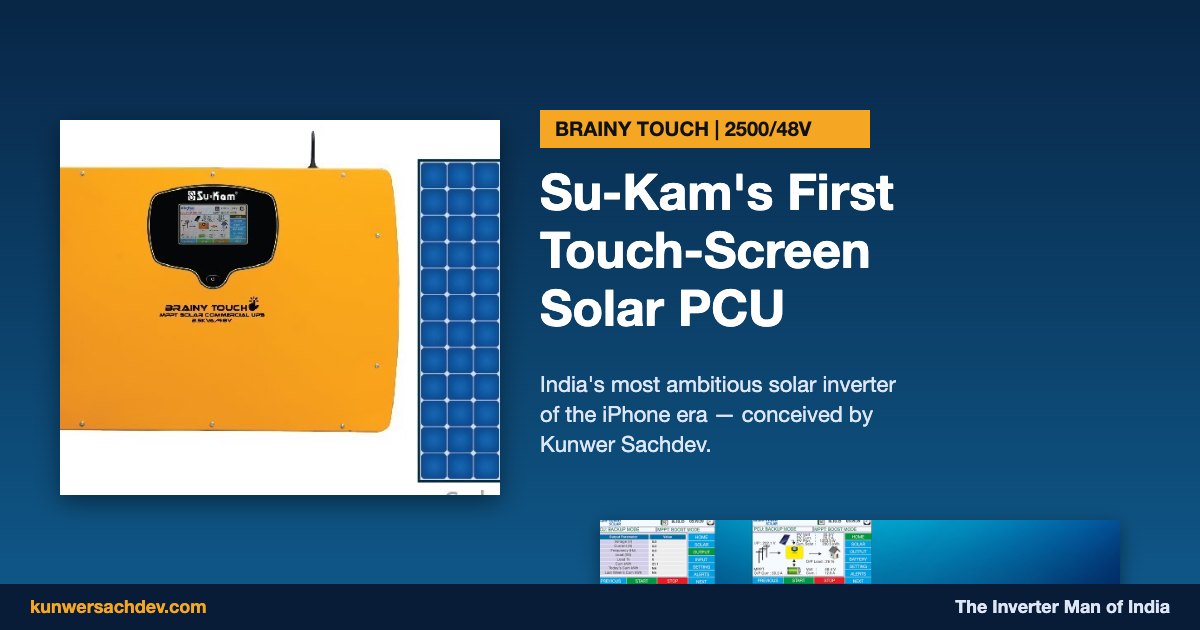
This insight led directly to the development of the hybrid solar PCU (Power Conditioning Unit) — a device that could charge batteries from both the electric grid and solar panels, automatically switching between the two for maximum efficiency. It was the plastic-body inverter's electronics platform, refined and extended, that made this possible at an affordable price point.
For us at Su-vastika, this connection between the inverter revolution and the solar revolution is deeply personal. The Solar Man of Indiastory is, in many ways, a continuation of the Inverter Man of India story. The same philosophy that our mentor instilled in us — make advanced technology affordable, safe, and accessible to ordinary Indian families — drives both chapters of that journey, and it drives us every day.
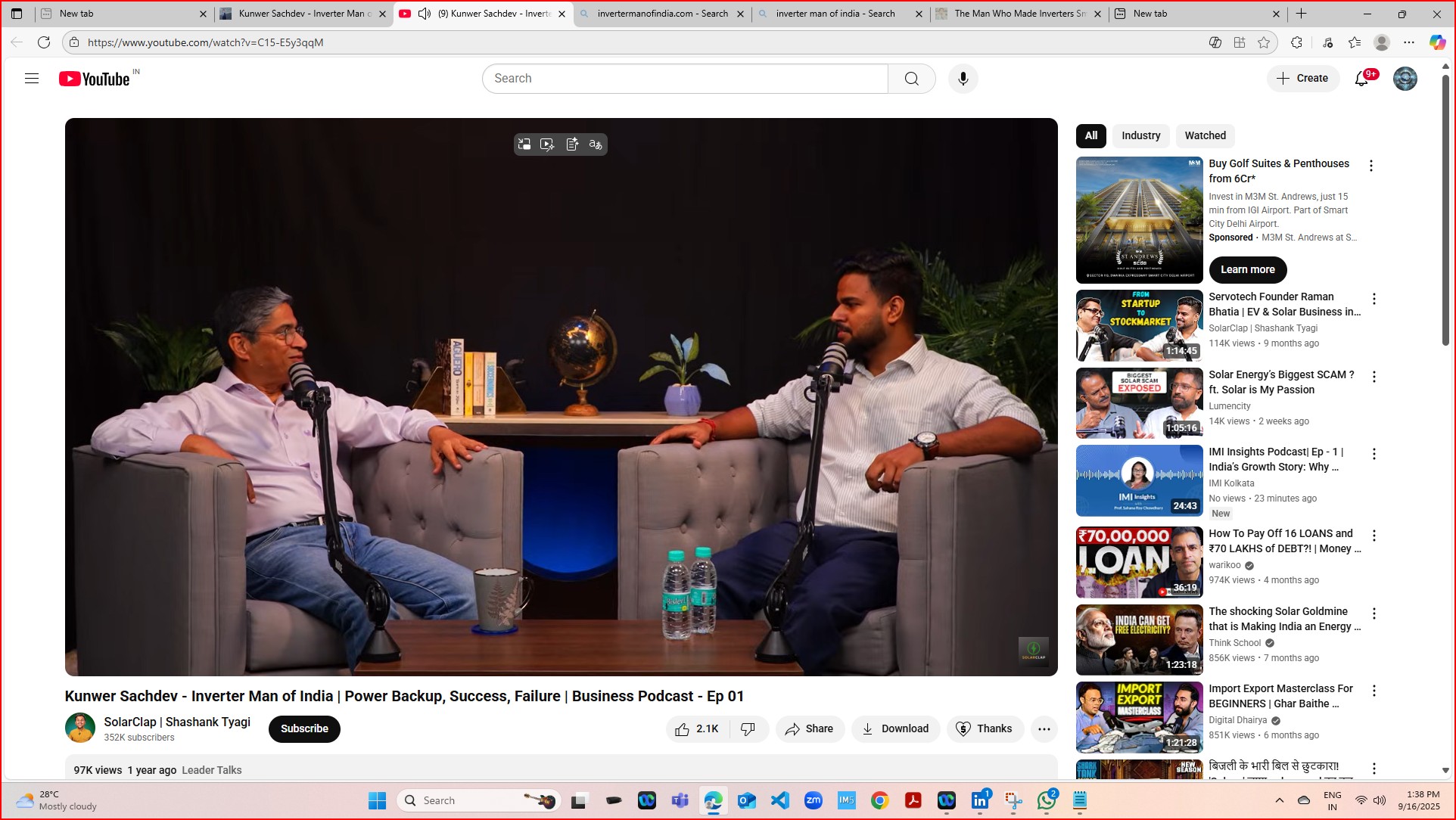
Recognition: Awards and Industry Firsts
That initial India Today clipping turned out to be just one piece of a much larger story. As we dug deeper into the archives, we found certificate after certificate, feature after feature. The plastic-body inverter and its successors did not just win market share — they won recognition from India's most respected institutions.
India Today — Innovation of the Decade
The flagship national magazine recognized the plastic-body inverter as the innovation that most significantly changed Indian households in the decade — a remarkable acknowledgment for a power electronics product. This is the clipping that started our whole research journey.
First 4-Star BEE Rating
Su-Kam achieved India's first-ever 4-star Bureau of Energy Efficiency rating for an inverter, proving that the plastic-body design was not just lighter and cheaper but also more energy-efficient than its metal predecessors.
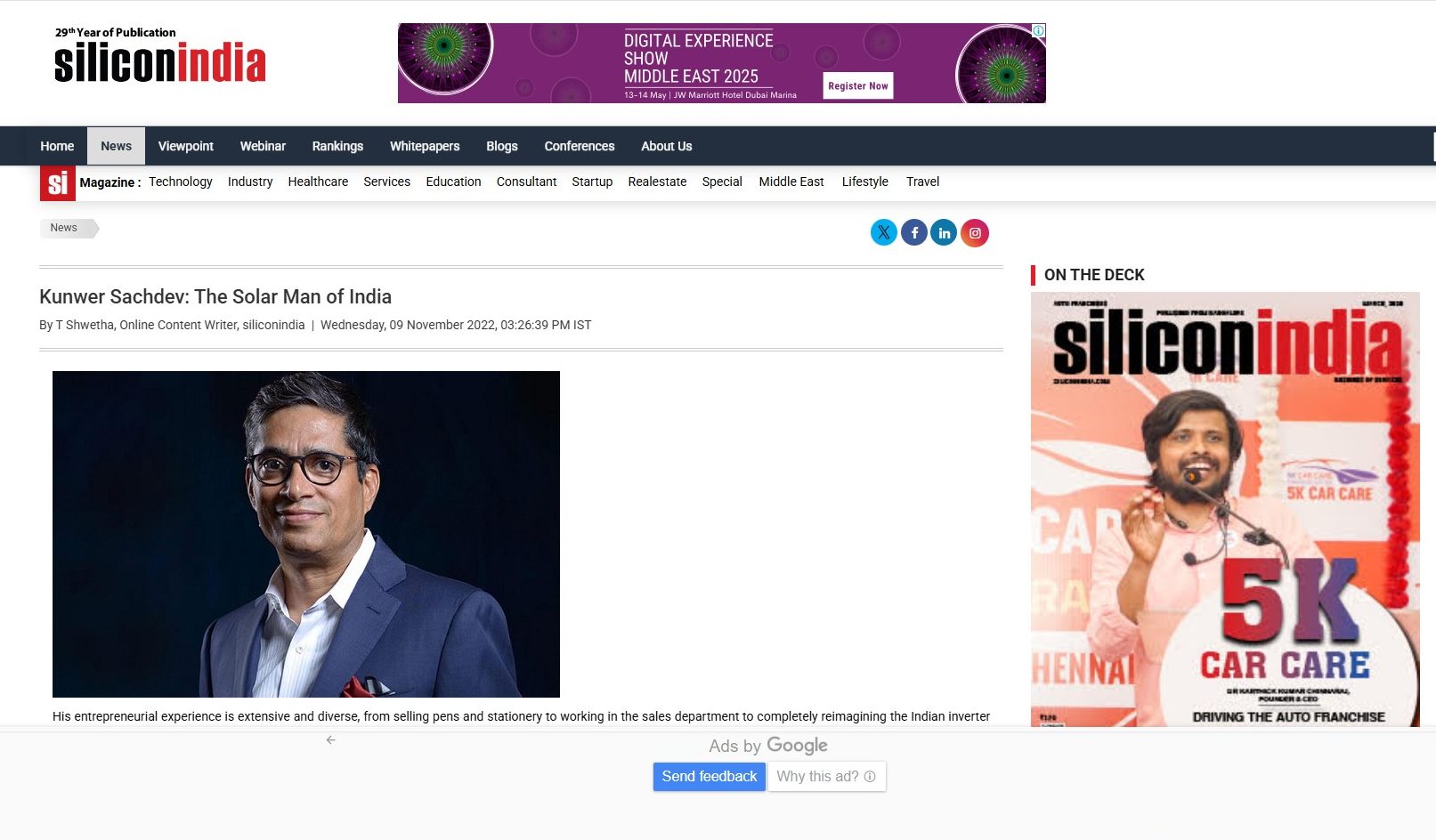
SiliconIndia Recognition
Featured as a leading technology innovator, with detailed coverage of how the plastic-body design disrupted an entire industry vertical.
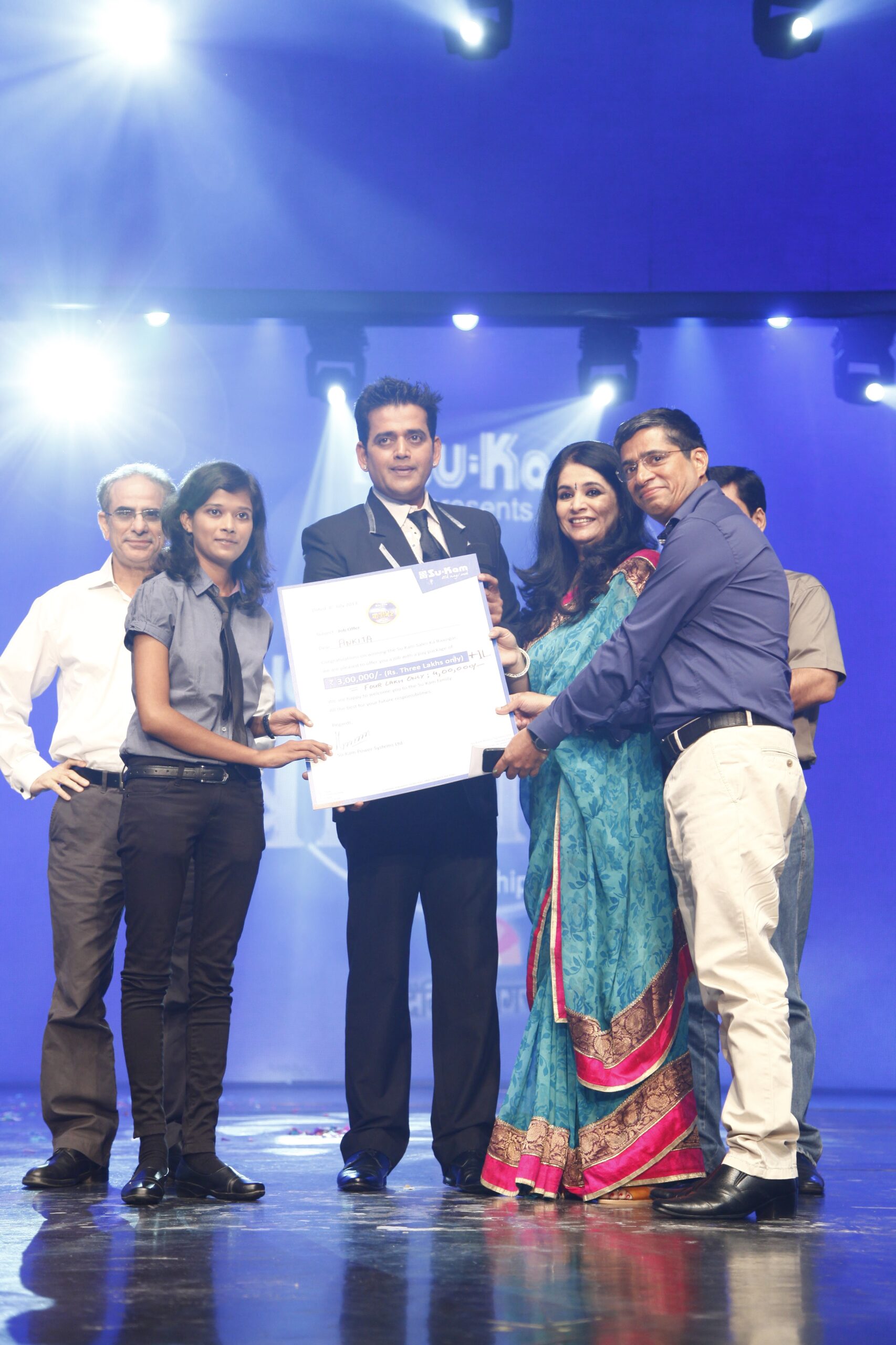
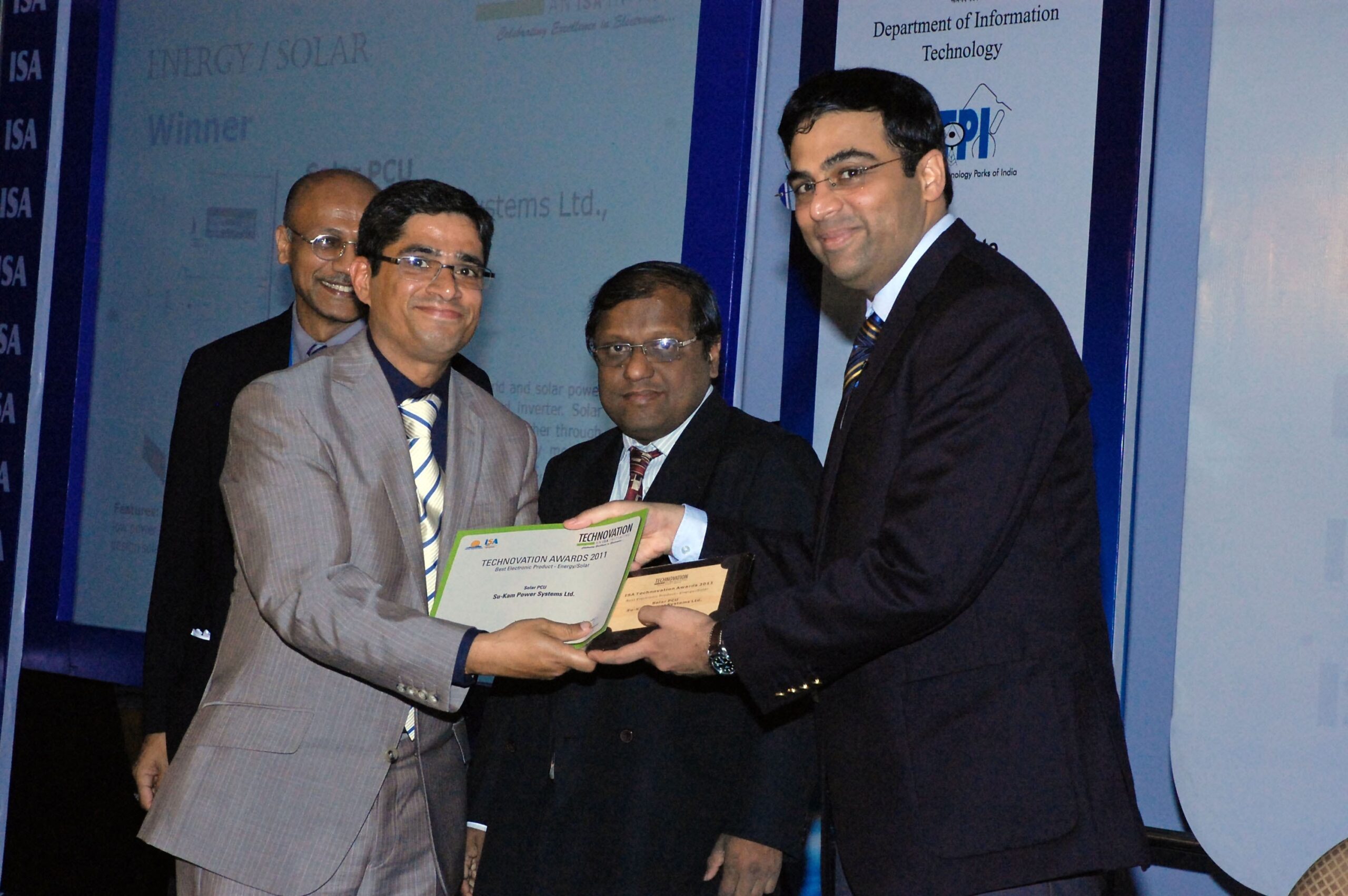
ISA Award
Honored for contributions to the Indian solar and power backup ecosystem, recognizing the continuum from inverter innovation to solar adoption.
The Legacy: Why It Still Matters to Us
The plastic-body inverter is now more than two decades old as a concept. In technology terms, that is ancient history. Yet its legacy continues to shape India's energy landscape in profound ways — and, frankly, it shapes our work at Su-vastika every single day.
Every rooftop solar installation in India today relies on an inverter that traces its design lineage back to the principles Kunwer Sir pioneered: lightweight construction, efficient electronics, consumer-friendly design, and affordable pricing. The hybrid solar PCU — now a standard product across the industry — exists because the plastic-body inverter proved that power electronics could be both sophisticated and accessible.
More broadly, the Innovation of the Decade was not really about plastic versus metal. It was about a mindset shift: the realization that Indian consumers deserved world-class product design, not just functional engineering. That philosophy — technology should serve people, not the other way around — is what earned our mentor the titles of both Inverter Man of India and Solar Man of India.
Finding that old India Today clipping changed how we see our own daily work. We are not just building power products. We are continuing a tradition of innovation that started with one person asking a deceptively simple question about why an inverter could not sit in a living room. That tradition is the foundation of everything we do at Su-vastika, and we are proud to carry it forward. Photographs and posts from across the years are preserved in the Facebook archive, and you can explore more perspectives in the blog archive.
Explore the Full Innovation Journey
From the first plastic-body inverter to pioneering India's solar revolution — discover the inventions, the recognition, and the vision that our mentor set in motion.

Found this story worth sharing? Post it to your network — it takes one click:
Kunwer Sachdev exited Su-Kam in 2019 and is not responsible for any activity of the company since. Full disclaimer →
Part of the Series
Solar PCU & MPPT Charge Controllers: Complete GuideExplore Products
Su-vastika Solar PCU
25+ patents · Made in India · 10,000+ installations