
Why Is My Inverter Not Charging the Battery? Causes & Fixes
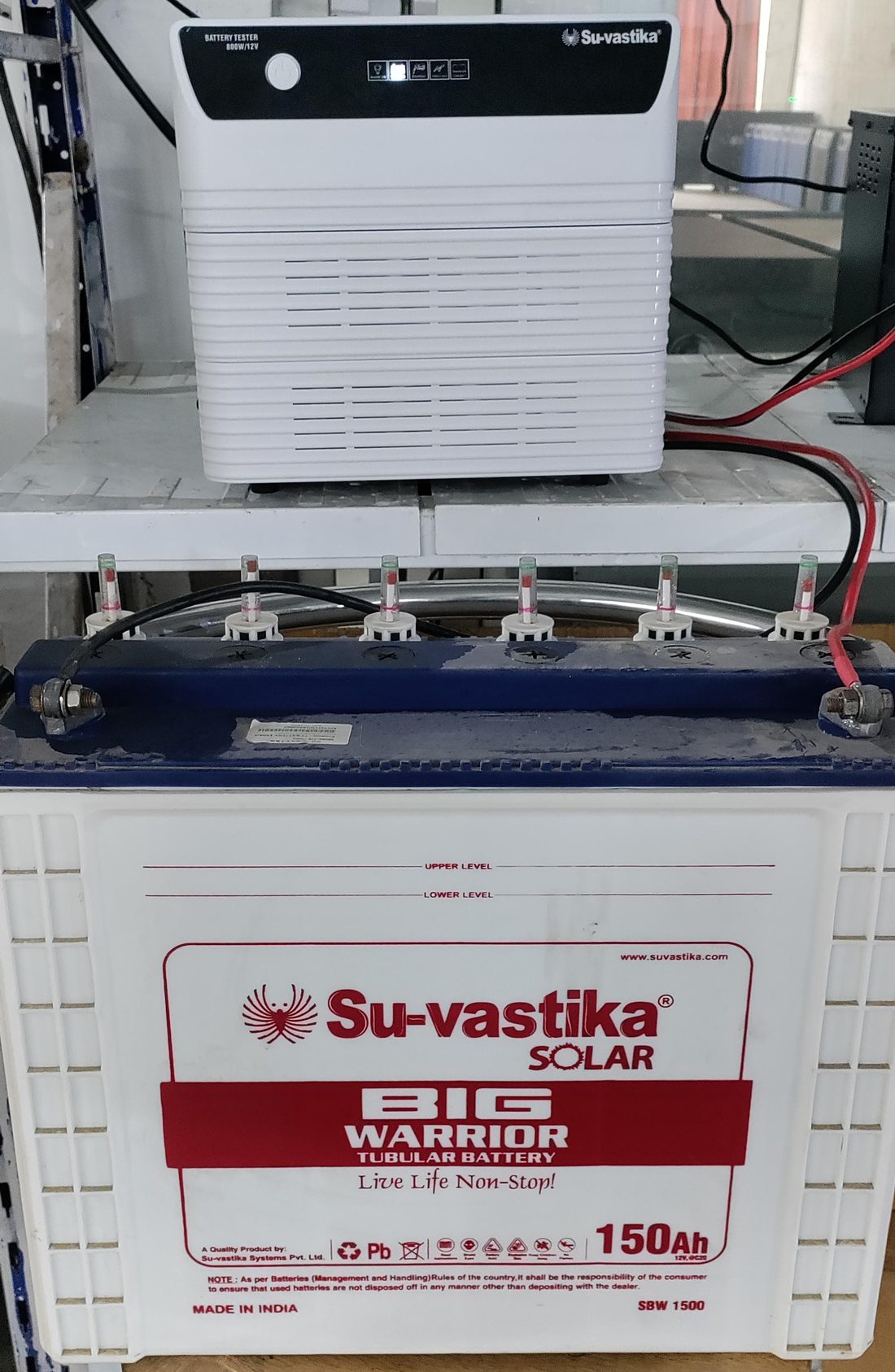
Nine times out of ten, when a customer tells me "my inverter is not charging," the inverter is perfectly fine — the indicator is simply lying to them. The charging LED and the display read the battery's voltage, and a worn-out battery fools that reading completely. Below is exactly how I diagnose a "not charging" complaint on a service call, in the order that actually finds the fault. — Kunwer Sachdev
First, understand what the "charging" light actually measures
This is the single thing most people get wrong. The LED (or the display) on your inverter does not measure how much energy is stored in the battery — it measures the battery's voltage. A healthy battery takes hours to climb to full voltage as it genuinely fills up. An exhausted battery, whose plates can no longer hold charge, shoots up to that same voltage in a few minutes — because there is almost nothing inside to fill. The inverter sees "full voltage," decides the job is done, and shows you a charged indicator. That is why the light says charged and yet, the moment the mains goes, you get only 5 to 10 minutes of backup.
So remember this: the charging light tells you the voltage, the backup time tells you the truth.
The three real reasons an inverter "won't charge"
1. The battery has gone bad — by far the most common
In a lead-acid battery the plates sulphate and the cells dry out over time. Once that happens, the voltage rises fast on charge and collapses fast under load. The inverter "works perfectly," the battery "works perfectly," every LED is correct — and still you are left with a few minutes of backup. People chase the inverter for days when the battery was the culprit all along. The give-away is always the same: a full indicator with a tiny backup time.
2. You live in a low-voltage area
Read the fine print of most inverters and you will find the charger only starts working around 140V — and even then it is just a trickle. The real charging current does not come in until the mains is up near 170V. If your locality runs low voltage (and large parts of India do, especially in the evenings when everyone is loading the grid), the battery never receives a proper charge. It limps along permanently half-full and dies an early death. Almost no buyer checks this specification before purchasing — and honestly, it is difficult for an ordinary customer to even know to look for it.
3. The inverter itself is faulty
Less common, but it happens: the charging section of the inverter is genuinely dead and will not charge even a brand-new, healthy battery. Here the fault is in the unit — the charging circuit, a charging device, or the board — not in the battery or the mains.
How to tell which one it is
| What you observe | Most likely cause | What to check |
|---|---|---|
| Light shows fully charged, but backup is only 5–10 minutes | Battery exhausted (false "full") | Battery water level first, then a load test |
| Charges only late at night / only when mains feels "strong" | Low mains voltage in your area | Measure your actual mains voltage at different times |
| A new, healthy battery still won't charge | Faulty inverter charging section | Get the inverter serviced |
My diagnostic order — do this first
Step 1: Check the battery water (electrolyte) first. Low or dry cells explain the majority of "not charging / no backup" complaints instantly, and it costs you nothing to look. Top up with distilled water if the levels are low and let it charge.
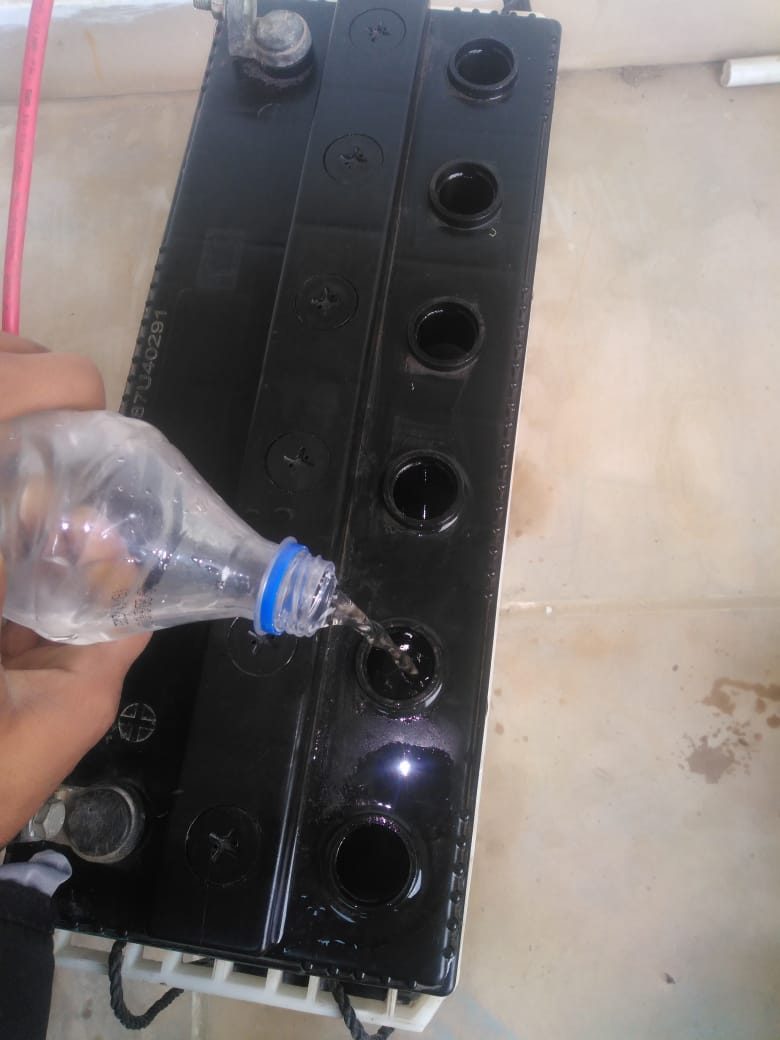
Step 2: Observe the conditions above. Note the backup time, measure your mains voltage at a few different times of day, and if you can, try a known-good battery on the inverter. Check the water first, then observe these conditions, and you will pinpoint the problem almost every time — without replacing parts on guesswork.
Why a Su-vastika handles all three differently
Most of these problems exist because the ordinary inverter's charger is built down to a price. We designed ours around exactly the failures above:
- Charges down to 100V input. Where an ordinary inverter sits idle waiting for 140–170V, a Su-vastika keeps charging the battery even in low-voltage areas — so your battery actually reaches full charge instead of limping along half-empty.
- Six-stage ATC (Automatic Temperature Compensated) charger. It charges the battery through proper stages and adjusts to temperature, instead of bludgeoning the voltage up and faking a "full" reading. Correct charging means the indicator tells the truth and the battery lasts far longer.
- Lithium (LiFePO4) option. No water to check, no sulphation, and a BMS that manages charging precisely — removing the single most common cause of "not charging" complaints altogether.
Frequently asked questions
My inverter shows fully charged but gives only 10 minutes of backup. Why?
That is the classic worn-out battery. The voltage-based indicator is being fooled — the battery reaches full voltage but holds almost no energy. Check the water, then load-test or replace the battery.
Why does my inverter charge at night but not during the day?
Low mains voltage. During the day, under heavy area load, your voltage may sit below the level where real charging current flows (~170V on ordinary units). At night the voltage rises and charging resumes.
Can a faulty inverter fail to charge a perfectly good battery?
Yes. If the charging section of the inverter is dead, even a brand-new battery will not charge. Test with a known-good battery to separate the two.
How do I quickly tell if it's the battery or the inverter?
Check the battery water first, observe the backup time and your mains voltage, then do a swap test with a healthy battery. That sequence isolates the fault almost every time.
Need an inverter that charges even in low-voltage areas?
Su-vastika inverters and UPS charge down to 100V with a six-stage ATC charger, and our LiFePO4 lithium range removes the battery-water problem entirely.
Related Su-vastika guides
- Inverter/UPS Charging Explained: Charger Capacity, Charging Time, ATC & Battery Life
- Battery Capacity C1, C10 and C20 Explained
- How to Fix an Overload Problem in Inverter/UPS
For wider context on India's grid reliability and the low-voltage supply conditions many homes face, see the overview of the Electricity sector in India, and for the battery side, Battery University's note on sulfation and how to prevent it.

Founder of Su-Kam and Kunwwer.ai, and mentor at Su-vastika and several other companies — the "Inverter Man of India."
Found this story worth sharing? Post it to your network — it takes one click:
About the Author

Kunwer Sachdev — known as the Inverter Man of India and the Solar Man of India. Founder of Su-Kam, holder of 106 technology filings, and mentor to Su-vastika. Read his story →
Follow on LinkedIn · kunwersachdev.com
Kunwer Sachdev exited Su-Kam in 2019 and is not responsible for any activity of the company since. Full disclaimer →