
Which Inverter Do You Need to Run a 1.5 Ton AC?
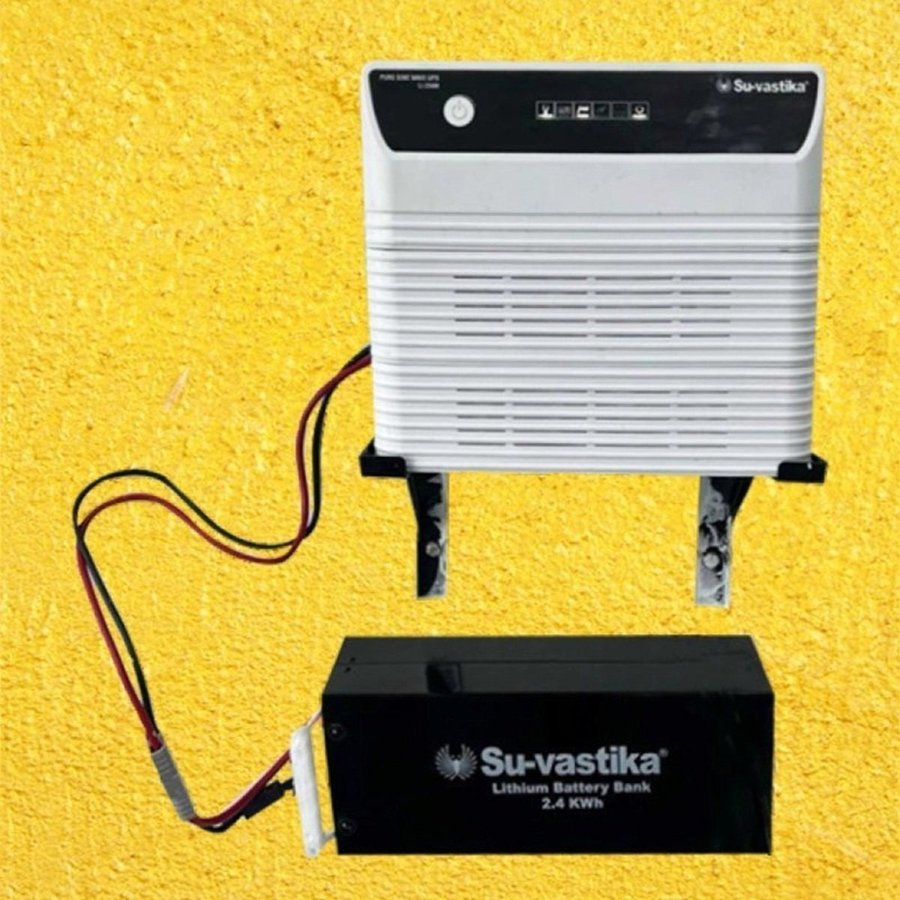
Want to run a 1.5 ton AC on an inverter during power cuts? You can — but it needs the right size. A 1.5 ton AC draws roughly 1500–1800 W while running, so you need an inverter with enough continuous wattage and surge capacity, plus a battery bank sized for the backup hours you want. Here’s exactly how to size it.
Running an air conditioner on battery backup used to be impossible with ordinary home inverters. With today’s high-capacity lithium inverters it’s routine — provided you match three things to the AC: running watts, startup surge, and battery energy.
How much power does a 1.5 ton AC need?
| AC size | Running watts | Startup surge | Suggested inverter |
|---|---|---|---|
| 1 ton | 1000–1200 W | 3–5× | 2–3 kVA |
| 1.5 ton | 1500–1800 W | 3–5× | 3.5–5 kVA |
| 2 ton | 2000–2400 W | 3–5× | 5 kVA+ |
An inverter (5-star) AC is easier on backup than a fixed-speed AC because its compressor modulates and cycles rather than running flat out — so the average draw is lower than the peak. But your inverter must still be rated to carry the startup surge when the compressor kicks in.
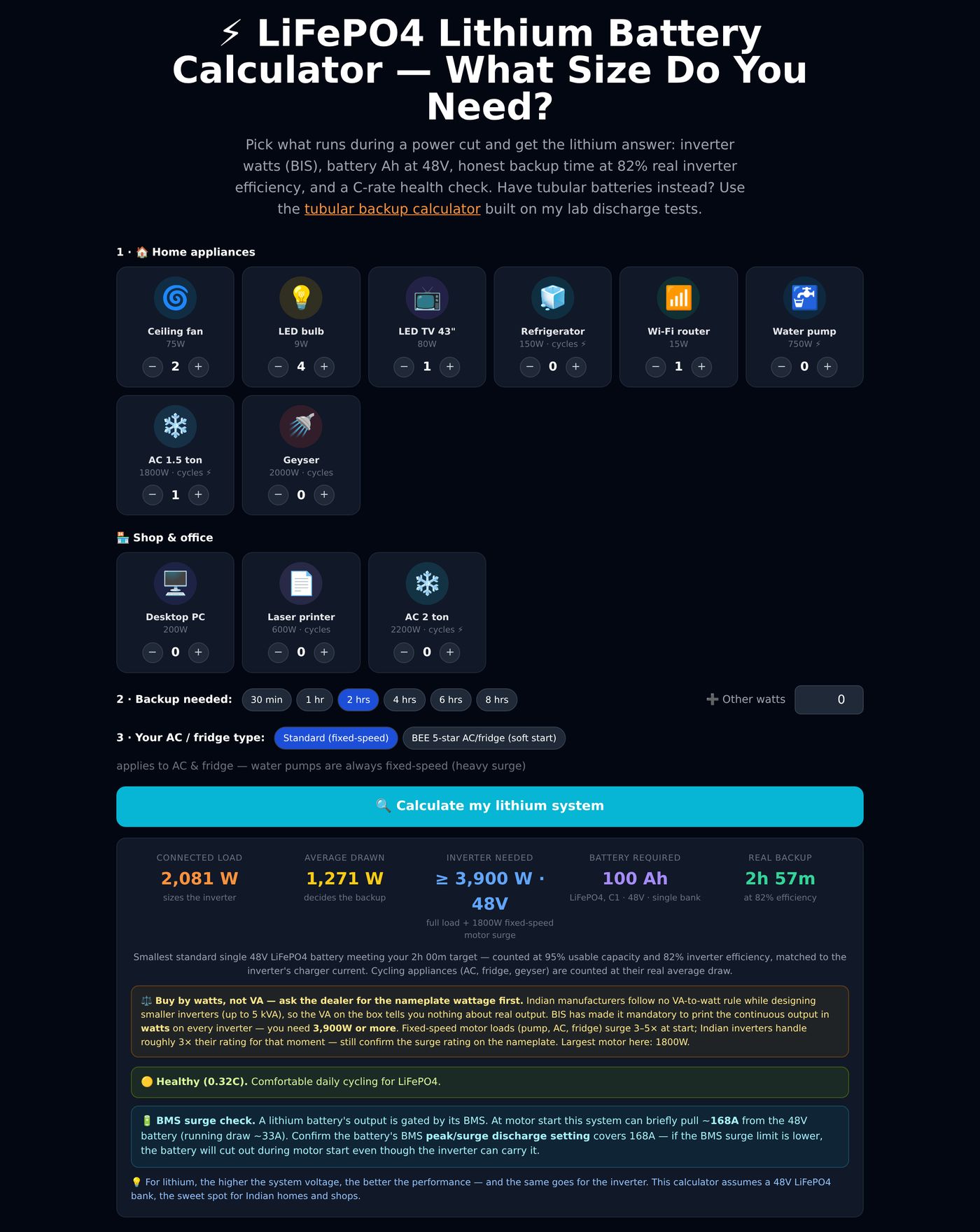
⚡ Get the exact size & backup time: add your AC plus your fans, lights and fridge in our free Inverter & Battery Backup Calculator — it returns the inverter watts, system voltage, battery Ah and real backup time, based on actual lab discharge tests.
Why lithium is better for running an AC
An AC is a heavy, sustained load, and that’s exactly where lead-acid batteries struggle: the harder you load a tubular battery, the less total energy it delivers, and deep daily cycling wears it out fast. A lithium (LiFePO4) battery holds its voltage under heavy load, delivers more usable energy, charges faster and lasts far longer — which is why AC-on-backup systems are almost always lithium. See our guide to the best lithium inverter in India and the difference between tubular and lithium batteries.
How long will it run?
Backup time depends on your battery bank’s energy (kWh) versus the AC’s average draw. As a rough guide, a 1.5 ton inverter-AC pulling ~1.2 kW average needs about 1.2 kWh of usable battery per hour of AC backup — so a larger bank buys more hours. The calculator does this math precisely for your exact appliances. Also see the 5 kVA lithium inverter + 4.8 kW combo built for exactly this.
Going lithium? Size it with the LiFePO4 calculator
If you’re planning a lithium (LiFePO4) system to run your AC, use the free LiFePO4 Lithium Battery Calculator — it sizes the inverter for compressor surge (with a BEE 5-star soft-start option), picks the right single 48V battery matched to the inverter’s charger current, checks the BMS surge amps, and gives real backup time at 82% inverter efficiency.
Frequently asked questions
Related Su-vastika guides
- Which appliances can an inverter run?
- 5 kVA lithium inverter + 4.8 kW combo
- Best lithium inverter in India — buyer’s guide
- How to calculate the load chart of a lithium inverter/UPS

Disclaimer: It is important to note that while Mr. Kunwer Sachdev founded Su-Kam Power Systems, he is no longer associated with the company as of 2019. Any information regarding his involvement in the company’s operations, strategies, or future plans reflects his tenure prior to that date. Therefore, any discussions or analyses of Su-Kam Power Systems should be considered in the context of his past contributions and not his current association with the company. He currently mentors Su-vastika.
Found this story worth sharing? Post it to your network — it takes one click:
About the Author

Kunwer Sachdev — known as the Inverter Man of India and the Solar Man of India. Founder of Su-Kam, holder of 106 technology filings, and mentor to Su-vastika. Read his story →
Follow on LinkedIn · kunwersachdev.com
Kunwer Sachdev exited Su-Kam in 2019 and is not responsible for any activity of the company since. Full disclaimer →
Part of the Series
Complete Guide to Lithium Batteries for Home Inverters in IndiaExplore Products
Su-vastika Lithium Batteries
25+ patents · Made in India · 10,000+ installations